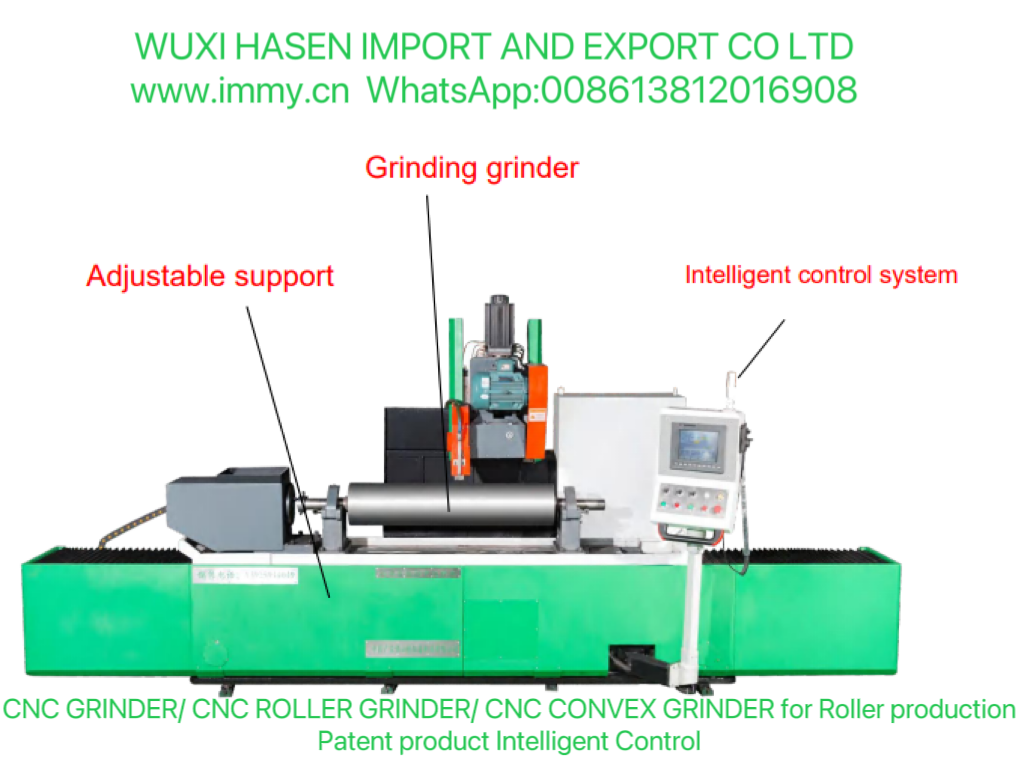
CNC Roller Convex Grooving Machine
High efficiency and Five-axis double-tool CNC automatic roller grinding accuracy Anti-collision Adopt double tool holder design, use the positive and reverse double tool cutter,through forward and reverse two-way cutting, the production efficiency is greatly raised. www.immy.cn / www.immyhitech.com
CNC CONVEX GROOVING MACHINE:
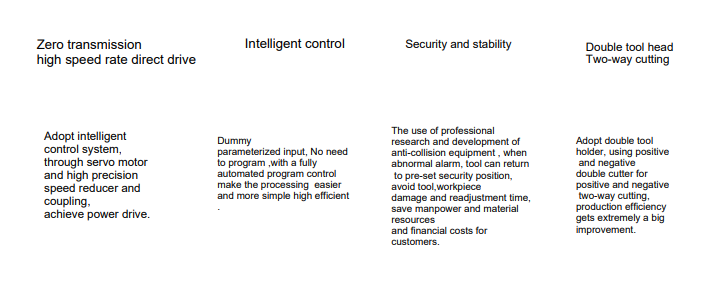
Zero transmission high speed rate direct drive
Adopt intelligent control system, through servo motor and high precision speed reducer and coupling, achieve power drive.
Intelligent control
Dummy parameterized input, No need to program ,with a fully automated program control make the processing easier and more simple high efficient
Security and stability
The use of professional research and development of anti-collision equipment , when abnormal alarm, tool can return to pre-set security position, avoid tool,work piece damage and readjustment time,save manpower and material resources and financial costs for customers.
Double tool head Two-way cutting
Adopt double tool holder, using positive and negative double cutter for positive and negative two-way cutting, production efficiency gets extremely a big improvement
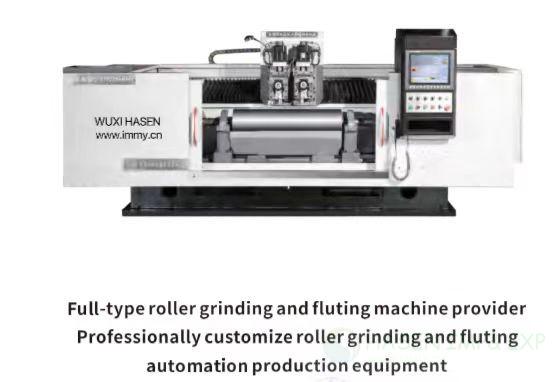
High efficiency and Five-axis double-tool CNC automatic roller grinding and fluting machine accuracy Anti-collision Adopt double tool holder design, use the positive and reverse double tool cutter,through forward and reverse two-way cutting, the production efficiency is greatly raised.
.jpg)
.jpg)
https://youtu.be/DoojY3woNPg
https://youtu.be/CA9fPGgOztk
FAQ: CNC 2 in 1 Roller Fluting & Convex Grooving Machines
For the Flour, Oil, and Flaking Milling Industries
General Overview
Q: What is a CNC 2 in 1 Roller Fluting Machine?
A: It is a specialized CNC lathe designed specifically for the reconditioning of industrial mill rolls. The "2 in 1" function refers to its ability to perform both Fluting (cutting the precise grooves into flour mill rolls) and Straight Knurling/Smoothing on the same machine without moving the workpiece.
Q: What is a Convex Grooving Machine?
A: This refers to the specific capability of the machine to cut a "convex" (crowned) profile onto the surface of rollers used in oil mills and flaking mills. Unlike flour mill rolls which are generally parallel, flaking rolls require a slight curve (convexity) on the surface to ensure even pressure and uniform flaking across the entire width of the roller under load.
Q: What is the difference between "Fluting" and "Grooving"?
A: While the terms are often used interchangeably, in this context:
Fluting: Refers to cutting helical grooves into the surface of break rolls in flour milling to shear open wheat kernels.
Grooving: Often refers to the precision texturing or crowning of smooth rolls (reducing rolls or flaking rolls) to improve grip and performance.
Technical Capabilities & Applications
Q: Can one machine handle both Flour Mill rolls and Flaking Mill rolls?
A: Yes. A high-quality CNC 2 in 1 Roller Fluting and Convex Grooving Machine is designed to handle both. It can switch between:
Fluting Mode: For cutting precise leads, spirals, and differentials required in flour milling (e.g., 9 to 16 cuts per inch).
Convex Mode: For generating the precise crown curve required on flaking rolls (used in breakfast cereal production or oilseed processing) to compensate for roll deflection under hydraulic pressure.
Q: Why is Convex (Crowning) necessary for Flaking Mills?
A: When hydraulic pressure is applied to the ends of large flaking rolls, the rolls tend to bend slightly in the middle. If the rolls were perfectly straight, the ends would touch harder than the center, resulting in uneven flake thickness. By cutting a precise convex profile (where the center diameter is slightly larger than the edges), the rolls deform under pressure to create a perfectly parallel nip, ensuring uniform flake thickness across the entire width.
Q: What types of rolls can be machined on this equipment?
A: These machines are designed to handle:
Flour Milling Rolls: Chill cast iron rolls (both break and reduction rolls).
Flaking Rolls: Large-diameter steel or cast rolls used in oatmeal and oilseed processing.
Oil Mill Rolls: Smooth or grooved rolls used in oil expeller units.
Technical Specifications & Design
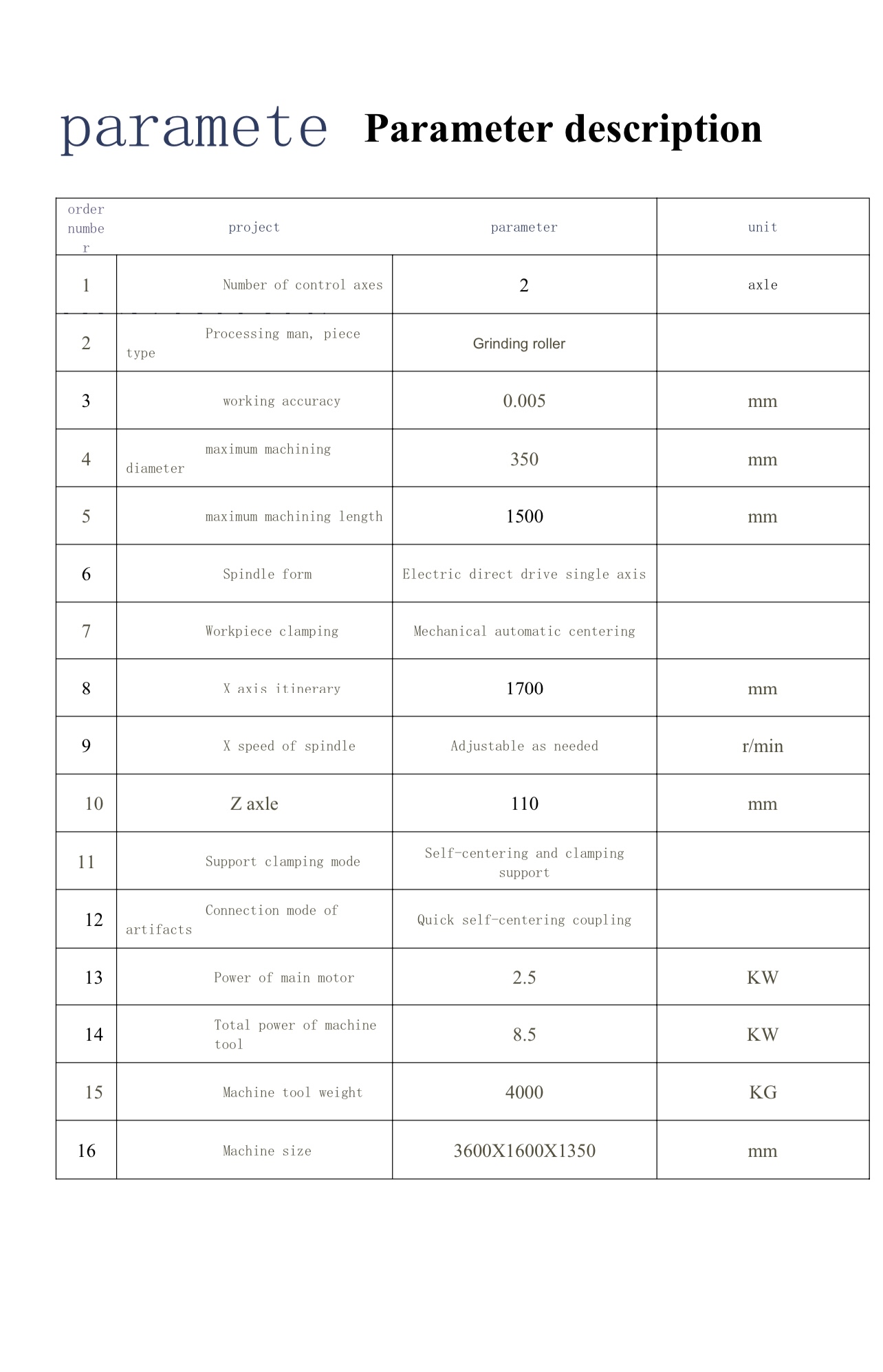
Q: What is the typical maximum length and diameter these machines can handle?
A: This varies by manufacturer, but industrial models typically range from:
Q: What tooling is required for these operations?
A:
For Fluting: Specialized profile-shaped carbide or CBN (Cubic Boron Nitride) inserts are used to cut the V-shaped grooves into the hard roll surface.
For Convex Grooving: Broad-nosed finishing tools or radius tools are used to traverse the roll and cut the precise crown profile.
Q: How is the "Convex" profile generated?
A: In modern CNC Convex Grooving Machines, the profile is generated via software.
The operator inputs the required crown dimensions (e.g., a 0.2mm crown over 1000mm length).
The CNC control calculates the precise arc (radius).
The machine automatically adjusts the tool position via the X-axis (depth) as it traverses the Z-axis (length) to cut the curve.
Operational Benefits
Q: What are the advantages of a "2 in 1" machine over dedicated single-purpose machines?
A:
Space Saving: One machine replaces two (a fluting machine and a crowning lathe).
Cost Efficiency: Lower capital investment than buying two separate specialized units.
Time Saving: Eliminates the need to transfer a heavy roll from a crowning machine to a fluting machine, reducing setup time and logistical hassle.
Precision: Because the roll is machined in a single setup (if both operations are required), the geometric alignment between features is perfect.
Q: How does CNC improve the quality of fluting and grooving?
A: CNC (Computer Numerical Control) eliminates human error.
Consistency: It ensures every flute has the exact same depth, angle, and lead across the entire roll.
Repeatability: If you have a "recipe" for a specific type of wheat or a specific flake thickness, you can save the program and recall it months later for perfect repeatability.
Complex Profiles: CNC allows for complex helix angles and variable leads that are impossible to achieve with mechanical gear trains.
Maintenance & Operation
Q: How often do mill rolls need to be re-fluted or re-grooved?
A: It depends on the throughput and material being ground.
Flour Mills: Break rolls typically need re-fluting every 6 to 12 months, depending on tonnage.
Flaking Mills: Rolls may need re-grinding and re-crowning every 1-2 years, depending on wear and tear from hard materials like maize or soybeans.
Q: Is it difficult to train operators to use these machines?
A: Modern CNC machines are designed with user-friendly interfaces (often with conversational programming). If an operator understands basic milling principles, they can usually be trained on the CNC interface within a few days. The machine handles the complex geometry automatically; the operator mainly handles loading, setup, and quality checks.



 Call us:
 Wuxi Hasen sales