An animal feed machine line converts raw grains, oilseed meals and by-products into a consistent, saleable feed: ground, weighed, mixed, conditioned, formed, dried and cooled. The machines in this section cover that chain from the mixer and extruder through the pellet mill to the crumbler, dryer and cooler that finish the product.
WUXI HASEN IMPORT AND EXPORT CO., LTD supplies feed milling machinery, individual machines and replacement parts to feed mills, livestock producers, aquafeed plants and biomass pellet producers across Asia, the Middle East, Africa and South America. We are a supplier and export partner rather than a machine tool builder, so our work is in defining the duty, sourcing the machine that matches it, inspecting it before shipment and keeping the plant supplied with the parts that wear.
What an animal feed line covers
A feed mill is a chain of duties, and pellet quality is decided by almost all of them rather than by the pellet mill alone.
- Receiving and grinding - intake, cleaning and particle size reduction to the target grind.
- Batching and mixing - weighing micro and macro ingredients, then blending to a specified uniformity.
- Conditioning - adding steam, heat and moisture so starch gelatinises and the mash binds.
- Pelleting and extrusion - forming the feed through a die, or cooking and expanding it in an extruder.
- Crumbling and sizing - reducing pellets to the granulation a specific livestock class needs.
- Drying, cooling and stabilising - bringing temperature and moisture down to a stable storage condition.
- Liquid addition - dosing fats, oils, molasses and additives at a controlled rate.
Mixing and liquid addition
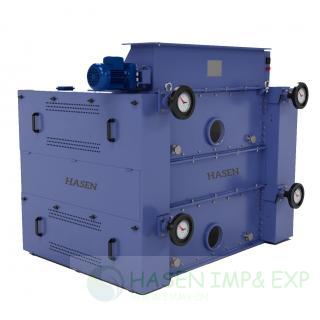
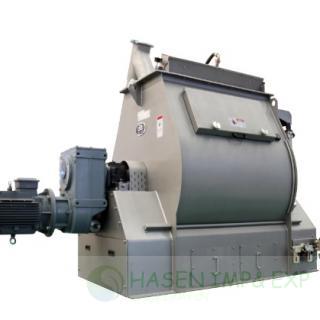
Uniformity starts before pelleting. A single shaft double-convective paddle mixer blends macro and micro ingredients to a defined coefficient of variation, and the mixing time is set per formulation rather than per machine. Downstream, liquid addition and spray systems dose fats, oils, molasses, enzymes and vitamins at a controlled rate, usually at the mixer or at the pellet mill inlet.
Liquid addition is one of the cheaper levers a feed mill has. Fat added at the mixer raises the energy density of the ration and reduces die wear, but the same fat added at the wrong point or at too high a rate destroys pellet durability. Where the addition point cannot be adjusted, the practical result is a weaker pellet rather than a richer feed.
Pelleting and extruding
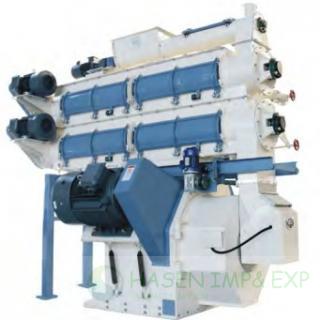
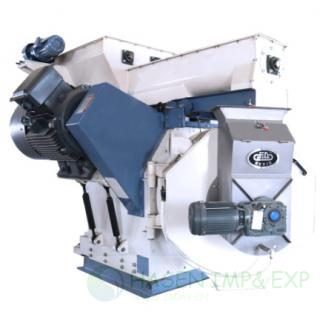
The ring die pellet machine is the core of most feed lines. Die hole diameter, die thickness, compression ratio, roller clearance and the conditioner settings together determine throughput and durability, and they have to be matched to the formulation: a ration with high fat or high fibre behaves very differently from a simple maize-soya ration. Ring die pellet machines are specified for durability and energy efficiency, and ruminant feed pellet mills are configured specifically for high-fibre rations that are harder to bind.
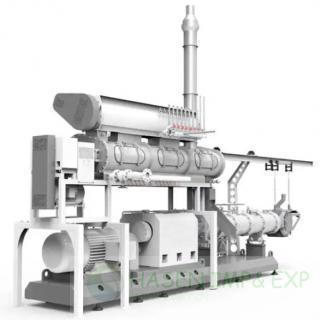
Screw extruders are used where the product needs cooking rather than simple compression. Extrusion gelatinises starch, denatures protein and produces floating or sinking aquafeed depending on the die, screw profile and processing conditions. Because extrusion is a cooking process rather than a forming process, the residence time, moisture and temperature profile matter as much as the die itself.
Crumbling, drying and stabilising
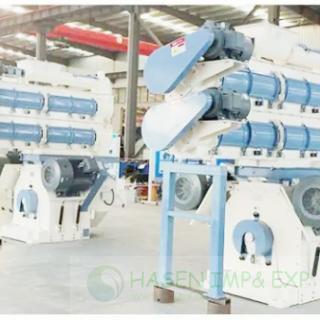
A crumbling system reduces pellets to uniform granules for young livestock, where a full pellet is too large and a mash is too fine. The crumbler rolls are set to a target granulation and are normally paired with a sifter that returns oversize material and removes fines.
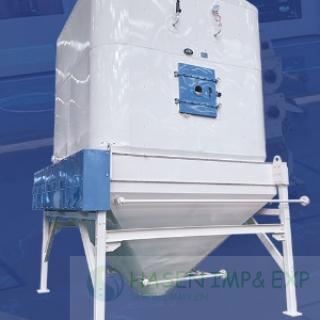
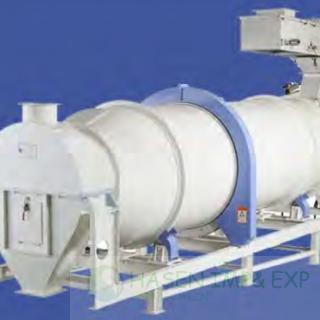
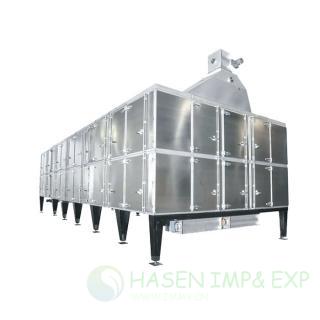
Drying and cooling bring the product to a stable condition for bagging and storage. The drying system and the cool feed stabiliser work together: drying reduces moisture, cooling reduces temperature, and stabilising holds the product long enough for the temperature and moisture gradients inside each pellet to even out. Bagging a pellet that is still warm and damp is one of the most common causes of mould in storage, and the fault is usually not in the dryer but in the dwell time after it.
Biomass pellets
Biomass pellet equipment follows a similar pelleting logic but a very different material. Wood, straw and agricultural residues are harder to bind than feed because they contain little starch or protein, so die geometry, conditioning and sometimes binder addition are selected specifically for the raw material. A machine sized for feed is rarely the right choice for biomass without reconfiguration.
Capacity, layout and the decisions that matter
Before a machine list makes sense, answer four questions: the target tonnes per hour, the species and feed class, the formulation range and the pellet size and durability the market expects. A line that must switch between poultry, ruminant and aquafeed formulations needs different conditioning and die capacity from a single-formulation plant of the same headline output.
Spare parts and wear items
Ring dies, rollers, roller shells, hammers, screens, crumbler rolls, belts, bearings, seals and pneumatic valves wear on a schedule. Dies in particular are a consumable, and matching die geometry to the formulation correctly is what keeps the consumable cost per tonne under control. Where a plant runs machines from several original suppliers, we consolidate these items into one shipment and one document set.
How we work with you as a supplier
Our contribution is on the specification, sourcing, inspection and logistics side of the transaction:
- Requirement definition - we start from your duty, capacity, formulation range and existing line layout, not from a fixed catalogue.
- Machine and part matching - for replacement items we work from dimensions, photographs and part numbers so what arrives fits what you have.
- Inspection before shipment - dimensional checks, function tests and photographic records of the actual unit being shipped.
- Documentation - packing lists, invoices and the shipping papers your customs broker asks for, prepared to match the shipment.
- Consolidated shipping - machines, spares and accessories combined into one consignment to reduce freight and clearance cost.
- After-sales support - installation guidance, commissioning support and a route to reorder the same wearing parts.
Frequently asked questions
Can you supply a single pellet mill instead of a complete line?
Yes. Single machines and one-off wear parts are normal business for us. Small orders ship by air or LCL, complete lines by FCL.
How do I choose between pelleting and extrusion?
Pelleting compresses and binds the mash into a durable pellet. Extrusion cooks and expands the material, which is what aquafeed and pet food usually need. If the product has to float, or the starch has to be gelatinised, that points to extrusion.
Why is my pellet durability lower than expected?
The usual causes are grind coarseness, insufficient conditioning, fat added too early or at too high a rate, and die geometry that does not match the formulation. We will work through the list with you rather than start by replacing the pellet mill.
Can you match a machine to a line built by another supplier?
Usually yes. Send the machine nameplate, key dimensions or a photograph with a tape measure visible, and we will confirm whether an equivalent or a modified item is the practical route.
Talk to us about your feed line
Send us your target output in tonnes per hour, the species and feed classes you produce, and a photograph or drawing of the existing line if you have one. We will come back with the equipment list, the options that matter and the questions that still need answers before a quotation is meaningful.



 Call us:
 Wuxi Hasen sales