A rice mill machine line takes paddy in at one end and delivers polished, graded rice at the other, with husk, bran and broken kernels separated along the way. The machines in this section cover the full paddy-to-rice sequence: cleaning, dehusking, paddy separation, whitening, polishing, grading and sifting.
WUXI HASEN IMPORT AND EXPORT CO., LTD supplies rice milling machinery, individual machines and replacement parts to rice mills, grain depots and turnkey grain projects across Asia, the Middle East, Africa and South America. We are a supplier and export partner rather than a machine tool builder: our work is to define the duty, source the machine that matches it, inspect it before shipment and keep the plant supplied with the parts that wear.
What a rice mill line covers
Paddy arrives with straw, dust, stones and immature grains that have to come out before any milling happens, and each stage downstream depends on the one before it being done properly.
- Intake and pre-cleaning - receiving, weighing, coarse screening and destoning.
- Dehusking - removing the hull without breaking the brown rice inside, then separating husk from the grain stream.
- Paddy separation - returning unmilled paddy to the dehusker while sending brown rice forward.
- Whitening and polishing - removing bran layers in stages, then polishing the surface.
- Grading and sifting - separating head rice from brokens, and removing residual bran and foreign matter.
- By-products - husk for fuel or bedding, bran for feed and oil extraction.
Cleaning and paddy separation
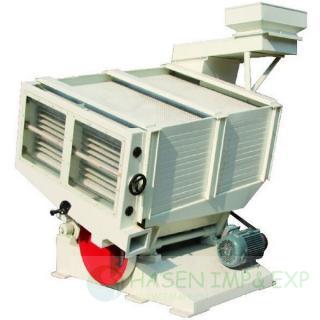
Cleaning is where line efficiency is usually won or lost. The indented cylinder separator lifts short grains, broken kernels and foreign seeds out of the paddy stream on the basis of length rather than width, which is something flat sieves and screens cannot do. Used early in the line it protects every downstream machine from material that would otherwise be milled and then have to be removed again.
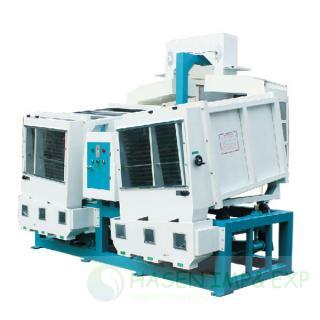
The gravity or paddy separator splits the dehusked stream into brown rice and unmilled paddy so the paddy can be recycled to the dehusker. Its setting is one of the most sensitive on the whole line: too coarse and paddy reaches the whitening machines, too fine and good brown rice is recycled and re-broken.
Dehusking and husk separation
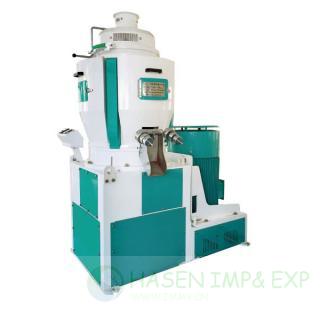
Pneumatic hulling machines remove the hull using a controlled gap between rubber rollers, and the same machine is usually combined with aspiration and separation to lift the light husk away from the denser grain. Roller pressure, roller wear and the gap setting determine breakage rates, and worn rubber rollers are one of the most common causes of an unexplained rise in brokens.
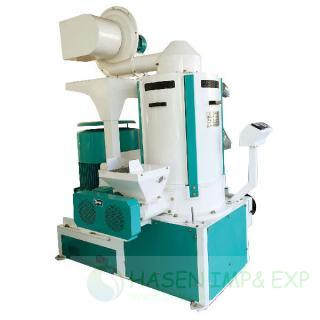
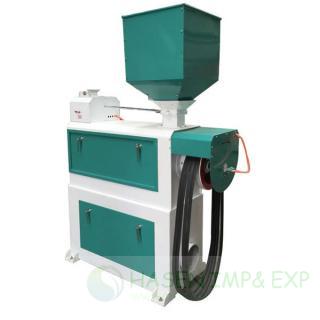
Sand roller and iron roller whitening machines then remove the bran layers in successive passes. Sand rollers give a gentler, cooler action suited to low-temperature milling and to varieties where surface colour matters; iron rollers remove bran faster and are normally used where throughput is the priority. Many mills run a mixed set, and low-temperature configurations are specified where head rice yield and shelf life matter more than maximum throughput.
Whitening, polishing and grading
Whitening is done in stages rather than in one pass, because removing all the bran at once generates heat and pressure that crack the grain. A typical sequence uses two or three whitening machines followed by a polisher and then a flat rice sieve or grader. The polisher lifts the remaining bran dust and gives the surface finish the market expects.
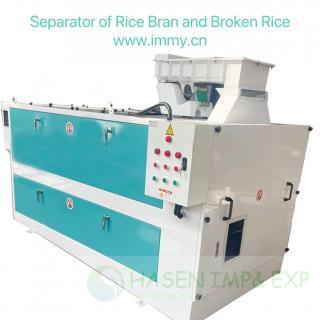
Grading separates head rice from brokens by size, and is the stage that decides what fraction of the mill's output can be sold as premium grade. Broken separation is often more valuable than a marginal increase in throughput, which is why grading equipment is worth specifying carefully rather than as an afterthought.
Capacity, layout and the decisions that matter
Before a machine list makes sense, answer four questions: the target tonnes per day of paddy, the number of working hours, the paddy variety and moisture at harvest, and the head-rice ratio the market is paying for. Paddy moisture above the safe milling range will raise brokens no matter how good the machines are, so drying and tempering usually have to be considered as part of the same project.
For existing mills we look at where the brokens are actually generated. Replacing a whitening machine when the real problem is worn huller rollers, or an over-tight paddy separator setting, is an expensive way to solve the wrong problem.
Spare parts and wear items
Rubber huller rollers, sand and iron roller sleeves, screens and sieves, elevator buckets and belts, bearings, seals, spouts and aspiration parts wear on a predictable schedule. Where a mill runs machines from several original suppliers, we consolidate those items into one shipment and one document set.
How we work with you as a supplier
Our contribution is on the specification, sourcing, inspection and logistics side of the transaction:
- Requirement definition - we start from your duty, capacity, paddy variety and existing line layout, not from a fixed catalogue.
- Machine and part matching - for replacement items we work from dimensions, photographs and part numbers so what arrives fits what you have.
- Inspection before shipment - dimensional checks, function tests and photographic records of the actual unit being shipped.
- Documentation - packing lists, invoices and the shipping papers your customs broker asks for, prepared to match the shipment.
- Consolidated shipping - machines, spares and accessories combined into one consignment to reduce freight and clearance cost.
- After-sales support - installation guidance, commissioning support and a route to reorder the same wearing parts.
Frequently asked questions
Can you supply part of a rice mill line rather than all of it?
Yes. Most projects we handle are section replacements, single machines or a set of wear parts for a line that already exists. Small orders ship by air or LCL, complete lines by FCL.
How is head rice yield protected?
By correct roller settings, staged whitening rather than single-pass, and paddy that is at the right moisture before it reaches the huller. The equipment matters, but settings and moisture usually decide the result.
Do you supply rubber rollers and roller sleeves as spares?
Yes, and they are among the most frequently reordered items. Send the machine model and roller dimensions so the replacement matches the existing huller.
Can you match a machine to a line built by another supplier?
Usually yes. Send the machine nameplate, key dimensions or a photograph with a tape measure visible, and we will confirm whether an equivalent or a modified item is the practical route.
Talk to us about your rice mill line
Send us your target capacity in tonnes of paddy per day, the paddy variety and moisture you are working with, and a photograph or drawing of the existing line if you have one. We will come back with the equipment list, the options that matter and the questions that still need answers before a quotation is meaningful.



 Call us:
 Wuxi Hasen sales