Flour mill machines turn cleaned, conditioned wheat into flour through a fixed sequence of duties: breaking, reduction, sifting, purification and bran removal. The equipment in this section covers that whole chain, from the scourer and dampener that prepare the wheat to the roller mill, plansifter, purifier and bran brush that produce the finished grade.
WUXI HASEN IMPORT AND EXPORT CO., LTD supplies flour mill machinery, individual machines and replacement parts to flour mills, feed plants and grain processing projects in Asia, the Middle East, Africa and South America. We are a supplier and export partner rather than a machine tool builder, so our work sits in specifying the right duty, sourcing the machine that matches it, and keeping the plant supplied with the parts that wear.
What a flour mill machine set covers
A wheat flour mill is not one machine but a chain of duties, and the equipment behind each duty is chosen to suit the wheat, the extraction rate and the flour specification the mill is selling.
- Wheat cleaning - sieving, destoning, magnetic separation and scouring before the wheat is wetted.
- Conditioning - adding water to a target level and giving the wheat time to temper, so bran separates cleanly.
- Break and reduction - opening the kernel, then reducing the released endosperm into flour over successive passages.
- Sifting and purification - separating stocks by particle size and by density to isolate clean semolina and flour.
- Bran removal - brushing and finishing off the bran to recover the flour still attached to it.
- Internal transport and flow control - keeping every passage evenly loaded rather than letting one stage starve.
Cleaning and conditioning equipment
The intensive wheat scourer removes surface dirt, loose bran and insect fragments with a combination of impact and aspiration. It is normally the last cleaning step before the first dampening, because scouring dirty wheat only spreads the contamination. Alongside it, a disinfector or entolator treats the grain stream for insect control, and magnetic separators protect every downstream machine from tramp metal.
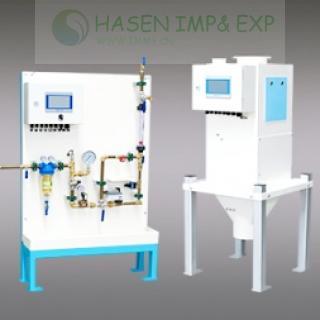
Conditioning is where mills most often lose performance without noticing. Intensive dampeners and moisture controllers add water to a measured target, and the wheat is then held in tempering bins for a time that depends on hardness, vitreousness and the flour grade being produced. Short tempering is the usual reason bran is torn during milling and ash content rises in the finished flour.
Break and reduction milling
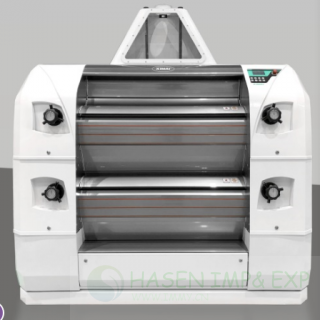
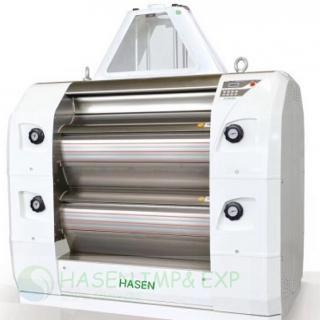
The roller mill is the heart of the section. Break rolls are fluted and run at a differential to open the wheat and scrape the endosperm away from the bran; reduction rolls are smoother and run closer together to size the released stock into flour. Roll diameter, roll length, flute density, spiral and the differential between the two rolls are all selected per passage, not once for the whole mill.
Because every passage behaves differently, mills specify roller mills in more than one configuration. A machine that is ideal for a first break is usually wrong for a late reduction passage, and a plant that buys one uniform machine type often ends up with uneven extraction.
Sifting, purification and bran removal
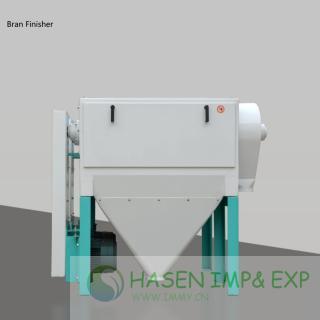
The high plansifter separates ground stock into the size fractions that feed the next passages. Purifiers then take the middlings and separate by size and density together, lifting clean semolina away from bran and germ particles. The rotary vibration sifter handles a range of lighter separations elsewhere in the plant, and the bran brush recovers the flour still adhering to the bran leaving the last break.
Screen cloth condition deserves more attention than it usually gets. A correctly tensioned, correctly specified cloth set is often the least expensive improvement available to a mill that is underperforming on extraction, and it costs less than any machine change.
Flow balancing and internal transport
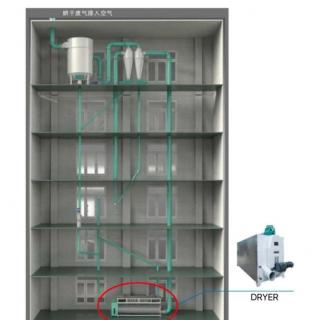
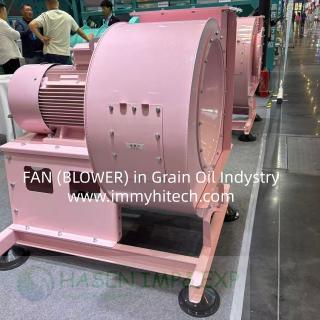
The flow balancer keeps the load even across rolls and sifters, which matters most in plants running multiple parallel milling paths. Without it, one path runs full while another runs lean, and the difference shows up later as inconsistent extraction and unstable flour ash. Pneumatic lifts, screw conveyors and air suction lines move the product between stages and are sized together with the pneumatic network rather than in isolation.
Capacity, layout and the decisions that matter
Before a machine list makes sense, four questions have to be answered: the target tonnes per day, the number of working hours, the wheat to be milled and the flour grade the market wants. A 200 tonne per day mill running 24 hours is a different machine set from a 200 tonne per day mill running two shifts, even though the headline number is identical.
For existing plants we also look at where the current bottleneck sits. Adding capacity downstream of a bottleneck rarely delivers the expected output, and it is common to find that the most practical gain comes from a new sifter or a re-clothed purifier rather than a new roller mill.
Spare parts and wear items
Rolls and grooving services, screen frames and cloth, brushes, rubber and polymer wearing parts, bearings, seals, belts, spouts and pneumatic valves all wear on a schedule. Where a mill runs machines from several original suppliers, we consolidate those parts into one shipment and one document set so the maintenance planner deals with a single delivery rather than four.
How we work with you as a supplier
Our contribution is on the specification, sourcing, inspection and logistics side of the transaction:
- Requirement definition - we start from your duty, capacity, wheat type and existing line layout, not from a fixed catalogue.
- Machine and part matching - for replacement items we work from dimensions, photographs and part numbers so what arrives fits what you have.
- Inspection before shipment - dimensional checks, function tests and photographic records of the actual unit being shipped.
- Documentation - packing lists, invoices and the shipping papers your customs broker asks for, prepared to match the shipment.
- Consolidated shipping - machines, spares and accessories combined into one consignment to reduce freight and clearance cost.
- After-sales support - installation guidance, commissioning support and a route to reorder the same wearing parts.
Frequently asked questions
Can you supply one machine instead of a complete mill?
Yes. Single machines, single replacement parts and complete sections are all normal business for us. Small orders ship by air or LCL, complete lines by FCL.
Can you match a machine to a mill built by another supplier?
Usually yes. Send the machine nameplate, key dimensions or a photograph with a tape measure visible, and we will confirm whether an equivalent or a modified item is the practical route.
How is mill capacity confirmed before ordering?
Against your target tonnes per day, working hours, wheat type and intended flour grade. For an existing mill we also review the current bottleneck, because capacity added behind a bottleneck rarely shows up in output.
Do you supply spare parts for machines you did not sell?
In most cases yes, and this is a large part of what we do. Wear parts are matched from dimensions and part numbers, and we will say plainly when a match cannot be confirmed.
Talk to us about your flour mill
Send us your target capacity, the wheat you are milling and a photograph or drawing of the existing line if you have one. We will come back with the equipment list, the options that matter and the questions that still need answers before a quotation is meaningful.
Before the machine ships
Two guides cover the documentation and payment side of a machinery order:



 Call us:
 Wuxi Hasen sales